

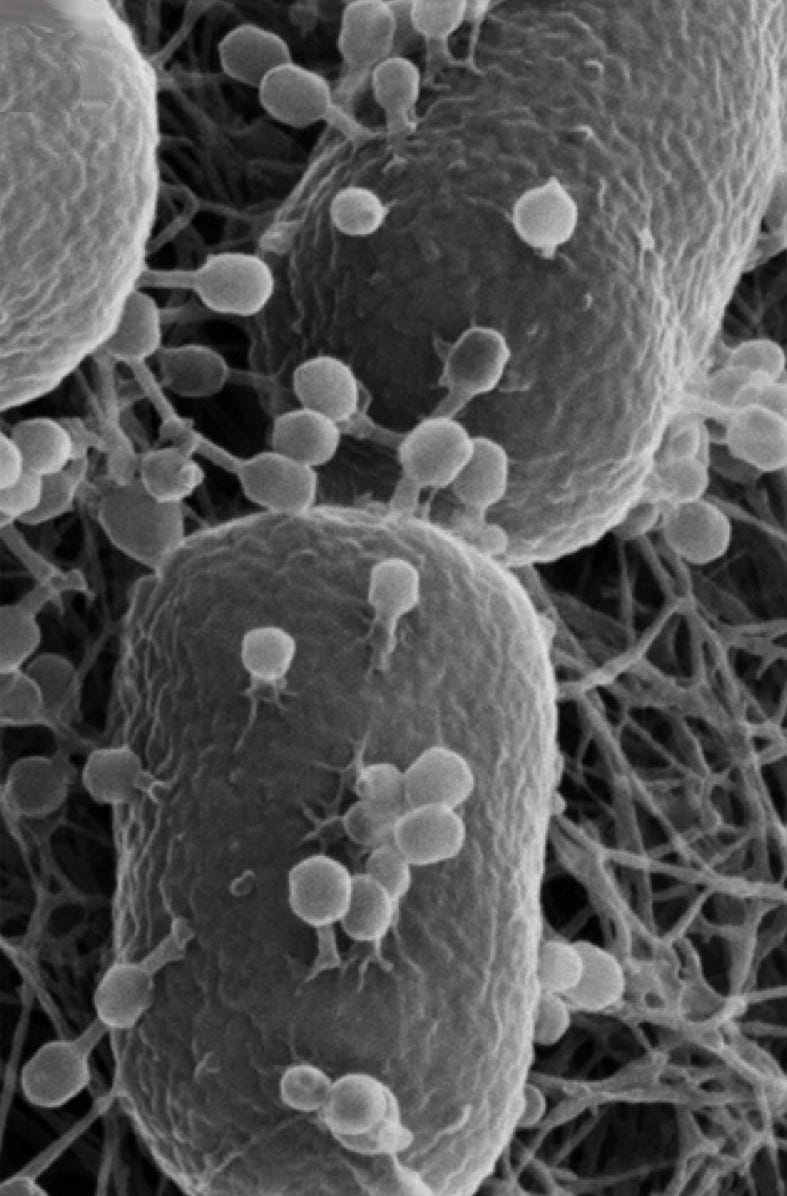
A recent article in this newsletter concerned the increasingly serious problem of multi-drug resistance (MDR) bacteria (see On war, multi-drug resistance and the globalization of the risk of infection.) These pathogenic bacteria cannot be killed by many standard antibiotics and can cause run-away infections that kill the people they infect. While the development of antibiotics was a major triumph of 20th century medicine, the evolution of MDR bacterial strains, untouched by these drugs, is a huge problem for 21st century medicine. It is estimated that in 2020 about a million deaths worldwide were due directly to infectious MDR bacteria while they contributed to several million more deaths in people weakened by other conditions. By the year 2050, the likely number of deaths directly resulting from MDR infection are estimated to range from eight to 20 million annually. Such numbers would be catastrophic for global health and have a huge impact on the world’s economy.
The big problem of bacteria frequently becoming resistant to antibiotics, eliminating the latter’s effectiveness, was long predicted (from the mid-1940s) but actually slow to develop. From the 1950s to the late 1980s, even as resistance to antibiotics was building up in bacterial populations, new antibiotics were coming on line that could be used. Hence, the problem was not solved but only evaded and postponed by these newly developed drugs. The developing phenomenon of multi-drug resistance, which had not been predicted, greatly magnified the problem of antibiotic resistance. By the 1990s, with MDR an undeniable problem and the pipeline of new antibiotics sputtering – the costs of finding and developing new ones had become excessive for the pharmaceutical companies – the sense of a growing crisis in treating bacterial infectious disease was unavoidable.
What, if anything, can be done about this serious medical problem? The answer, at least a partial one, may lie in some discoveries made in the late 19th and early 20th centuries, thus before the advent of penicillin, the first antibiotic, in 1928. The solution involves the use of viruses that infect and kill bacteria. These viruses are termed “bacteriophages”, which means “bacteria eaters”. Unlike antibiotics, which are “broad spectrum” in their action, namely effective against many kinds of bacteria, most bacteriophages (or “phage” for short) are often highly specific in the killing of particular bacterial types. This is potentially a strength since deadly bacterial infections nearly always involve one specific kind of bacterium and effective targeting by the phage of those bacteria is all that is needed. In turn, this can avoid some of the side effects associated with antibiotics. The latter, being broad spectrum, often wreak havoc on the bacterial species of one’s microbiome including those beneficial to one’s health (see On the human body as an ecosystem).
Before we discuss the use of phages as possible therapeutic agents, however, it would be helpful to back up a bit and review the basic history of viruses in biology. These organisms were quite mysterious for a long time and their nature took several decades in the early 20th century to become clear. In contrast, by the second half of the 19th century, the concept and reality of bacteria, and their importance in many diseases, were well-established.
That such small organisms as bacteria could have such large, and deadly effects, was itself an initially surprising fact. Yet, even then, there were indications that there were still smaller entities than bacteria that might be agents of disease. Though they could not be seen with the microscopes of the time, a few could be investigated. There was enough information even to generate therapies against a few. The vaccine treatments against smallpox (developed in the 18th century) and rabies (by Louis Pasteur and his colleague Émile Roux in 1885) were two such major successes, treatments that were developed before there was any real understanding of the agents that caused them.
At the time of development of the rabies vaccine, the term “virus” did not yet exist. It was coined in 1898 by Martinus Beijerinck (1851-1931), a Dutch microbiologist, to denote infectious biological agents that could pass through filters whose pores were too small for bacteria. Beijerinck showed that these agents had the capacity to infect and multiply in certain cells.
The first viruses identified were infectious to plant (tobacco) cells. It soon became clear, however, that viruses could also infect animal cells, including human cells, as seen in smallpox and rabies. The idea that there were viruses that could infect bacteria, however, had to wait for the second decade of the 20th century. This was shown by Frederick Twort (1877-1950), a British bacteriologist, in 1915 and by Felix d’Hérelle (1873-1949), a French-Canadian microbiologist in 1917. It was d’Herelle who coined the term “bacteriophage” and who first seriously explored their therapeutic potential.
Every virus consists of a genetic molecule, either DNA or RNA, and a protein “coat”. Some animal viruses wrap themselves in the cell membranes of the cells they infect and are said to be “enveloped” viruses. There are believed to be millions of kinds of viruses, of which only a small fraction are pathogenic to humans. The vast majority are bacteriophages, which, as noted above, have high specificity for the kinds of bacteria they infect.
Most people if asked what are the kinds of living organisms that characterize planet Earth would probably name animals and plants first, then possibly bacteria, and, finally, perhaps viruses as an afterthought. Yet, viruses are undoubtedly the most abundant group of organisms on earth in their total numbers, and, as mentioned, most are bacteriophages. This plenitude reflects the abundance of different kinds of bacteria, in the soil, in the air, and in the oceans, and also the fact that a typical phage infected bacterial cell will often release hundreds of phage particles. Where a specific kind of bacterium exists, there is almost certainly one or more kinds of bacteriophage which infect and kill it. One estimate is that between 20% and 40% of bacterial cells on Earth each day are killed by bacteriophage, a level of carnage that makes animal-on-animal predation look like a Sunday school picnic.1
It was d’Herelle who, more actively than Twort, pursued the possibility that phage might serve as therapeautic agents against pathogenic bacteria. He was interested in using phage, in particular, against typhoid and cholera although his successes in phage therapy were modest. An adventurous and restless person, he led far too peripatetic a life, living and working in many countries, to develop systematically a proven phage therapy and he did not do so.2 Yet, his ideas received attention and inspired later work, carried out principally in Georgia (then a member state of the USSR) and Poland (a member of the Soviet bloc of Eastern European countries). The laboratories there achieved much success in these therapies, which were long used in the USSR, and are still active.
Nevertheless, this approach was not taken up in Europe or in North America and essentially fizzled out in the 1940s. Why? The reason was that antibiotics came along and promised to be easier and cheaper. Unlike phage therapies, antibiotics do not have to be tailored to match the disease organism. In addition, one suspects that the association of phage therapies with the USSR and Eastern Europe clouded their reputation in the Western countries during the Cold War.
It seems ironic, therefore, and a case of delayed justice for d’Hérelle, in what is now being termed the “post-antibiotic era”, that phage therapies are now being given an extensive second look. This is being done in several research institutes and is reflected in a growing number of research articles and review articles.3 There is also a still small but growing number of patients badly infected with MDR bacteria, who were beyond the reach of antibiotic treatments, who have been cured by these therapies. These successes encourage further efforts and more extensive scientific trials.
It is the very specificity of the phage and host interaction which facilitates the process of organizing the patient’s therapy. In principle, one can cultivate the pathogenic bacterium, then take an appropriate filtrate from some liquid preparation that might contain suitable phages, do a dilution series of the filtrate and test those dilutions on the bacteria. An indication that the bacteria are being killed both indicates that there are phage that might be suitable and constitutes the first stage in isolating these viruses. Of course, there are difficulties in many such isolations but this is the kind of work that bacteriologists and virologists are skilled at carrying out.
The general assessment from people developing and/or following phage therapy, as I make it out, is that phage therapy will not provide a general and complete solution to the MDR problem but that it might help the situation substantially. It will probably do so not on its own but in combination with other procedures. Of course, many difficulties remain in turning these treatments into effective treatments at the scale needed but, at least, these aspects are beginning to get serious attention. An interesting finding in this respect is that, in some cases, bacteria that are selected for being resistant to a particular phage have a restored sensitivity to one or more of the antibiotics. Hence, antibiotics may re-enter the therapeutic picture as adjuncts.
Furthermore, an approach that is receiving attention, which was not an option in earlier decades, is various kinds of genetic engineering of the phage strains to make them make efficacious killers of the target bacteria. In the antibiotic era, victory over infectious diseases was claimed prematurely. It is good to have the hope that this fight is not lost but just entering a new stage. One can imagine the ghost of d’Hérelle smiling at this outcome and thinking “At last”.4
This figure of bacteriophage lethality comes from a news article in The Guardian Weekly, “The deadliest beings on the planet” by Jackson Ryan (17 January, 2025) but there was no cited reference and I have not been able to verify it.
D’Hérelle was an intriguing, adventurous man and his story is well-captured in the Wikipedia article, “Felix d’Hérelle”. He won several big honours in his lifetime and was nominated eight times for the Nobel Prize in Physiology and Medicine but died in obscurity, a largely forgotten man in 1949. The scientist- hero in the novel Arrowsmith by Sinclair Lewis is based on him.
Two good recent reviews are Altamirano, F.L.G., and Barr, J.J. (2019). Phage therapy in the postantibiotic era. Clin. Micro. Rev. 32: 1-25, and Strathdee, S.S. et al. (2023). Phage therapy: from biological mechanisms to future directions. Cell 186: 17-31.
The prospects and special challenges of engineering new phages for phage therapy are briefly but well reviewed in the Strathdee et al. article mentioned above.