

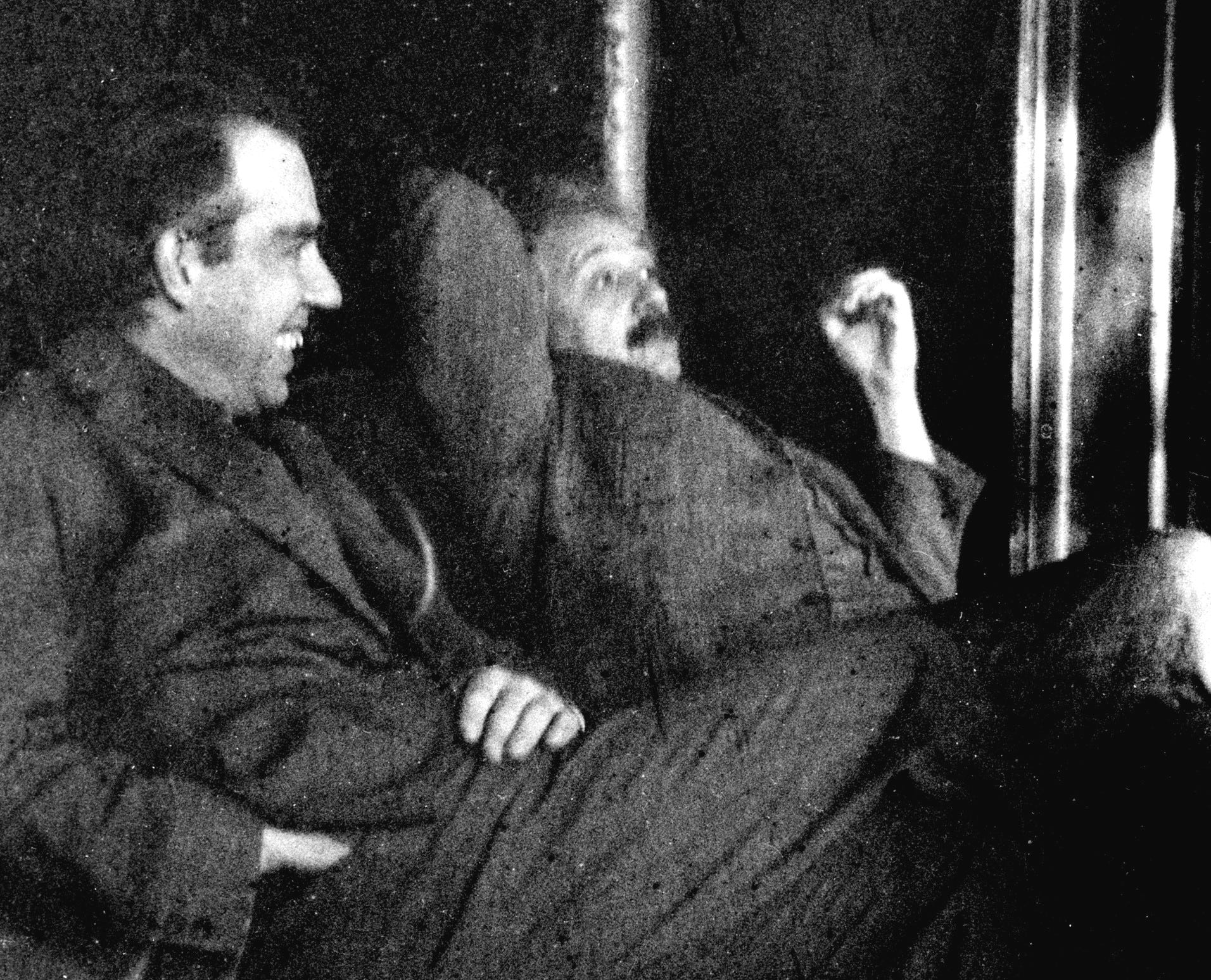
In this article, I address something that I see as a problem in both physics and biology but which is rarely discussed. I am talking about subjects that are, in some sense, beyond human understanding, not just for those untrained in science, but by even brilliant people who have considered them carefully. Is there a point in pondering subjects that are, in some way, incomprehensible and might never yield to human thinking?
I will give examples in a moment. The most obvious instances come from physics and its related subject, cosmology, but there are (at least) two in the realm of biology that pose a comparable challenge.
I approach this topic, however, from what may be an odd angle: what makes people different in both their interests and in their tolerance of uncertainty in their thinking? The ability to live with uncertainty is actually a signature trait of the very good scientist: one has to be patient in thinking about something hard if one wants to make progress with it.
The great American novelist F. Scott Fitzgerald once remarked that the mark of a first-rate mind was the ability to hold two contradictory ideas in one’s mind at the same time without going crazy. (I believe that the English poet John Keats said something similar, more than a century earlier, and Fitzgerald may have been aware of Keats’ remark.) Yet, trying to think about something for which there is no obvious intuitive explanation can make similar mental demands.
Readers of this column may recall that I am interested in what makes each of us different from everyone else (see my article: On Genes and Personality). I was thinking about this the other day in considering, not for the first time, the difference in intellectual interests between my brother and myself.
I find that difference intriguing because he and I seem so similar in other respects. First of all, we have a strong facial resemblance, which has become stronger as we have gotten older. I think anyone, looking at us, would think “these guys are probably brothers”. Second, our voices are similar. I remember my mother telling me once that when either of us ‘phoned her and began with a cheery “Hi, Mom”, she could never tell instantly which one of us it was. Third, on the Briggs-Myers personality scheme, we would definitely both be labeled as “thinking types”; we both approach experience via ideas. And, not least, by our mid-teens we were both clearly headed toward being scientists.
But the things that drew our interest strongly were quite different. My brother Dan was pulled toward mathematics and physics while I was drawn to biology and, to a lesser extent, chemistry (particularly the chemistry that distinguished living things from non-living objects.)
I could certainly understand the appeal of physics, cosmology and mathematics but they still left me rather cold. Superficially, the stumbling block was mathematics, so essential for physics. I was all right in maths in school but not at all gifted in it, whereas Dan clearly was.
Yet I think my lack of attraction to the big issues in physics, even as I appreciated them more in my late teens, ran deeper. I could not readily relate to the subjects of physics. They were either too big – the universe in its vast reaches with its endless numbers of galaxies and unimaginable beginning– or too small – the world of quantum physics and quarks , etc. Why try to think about things that were so beyond normal human experience that, in a sense, thinking about them would take one out of one’s own world? That was not a conscious thought on my part, just a feeling that steered me away from them.
Instead, the area that intrigued me was the world of visible things on this planet – animals, plants, landscapes, rock formations (I had an early passionate interest in geology and took an advanced course in it in high school.) Let us call this domain, of the visible and the immediate, the “meso-world”. Of course, by my mid-teens I was beginning to be exposed to the world of atoms and molecules in chemistry. Indeed, it was obligatory to understand chemistry if one was interested in living things: in this period – the late 1950s and early 1960s – molecular biology was taking off as a distinct science within biology. Yet, while atoms and molecules could not be directly seen by any form of imaging at the time (it is different today), one could think about them in building block terms, at least initially.
In effect, I could adapt my mind to dealing with very small things – atoms and molecules – without needing thinking that was beyond me. (In contrast, my brother, by his early 20s was into relativity theory and black holes! Talk about things beyond normal experience!) By the time I got into the physics of chemical reactions in college, I was ready for that and it was not too much of a stretch beyond the meso-world.
Could my timidity about thinking about things that seemed so strange as the ultra small (the world of quantum physics) or the unimaginably large (the universe) simply reflect my own intellectual limits? This was my view for decades. Yet, in the past decade or so, I have returned to this question and asked myself: how do physicists themselves, including the most brilliant, cope with thinking about matters for which normal human experience and intuition provide no guides? How do they cope with this situation?
My provisional answer is: with great difficulty. From my reading in the past year about the history of early 20th century physics, it is clear that the founders of quantum mechanics disagreed profoundly about its basics. I am referring to its giants: Werner Heisenberg, Niels Bohr, and Erwin Schrödinger. Heisenberg and Bohr are considered the joint founders of what is known as the Copenhagen interpretation of quantum physics. Yet, they differed about its fundamentals and even about the extent of their disagreement.
Heisenberg was, at least, superficially content with the ability of the mathematics to provide a coherent unity to quantum mechanics, even if it provided no insight into the actual physical reality that the mathematics was presumably explaining. Bohr took refuge in his “complementarity principle”, dealing with the seeming wave-particular duality of the photon. This principle looks, to me, like declaring an inherent contradiction the final reality and not requiring further thought, in short a dodge rather than a solution. 1
Then there was Albert Einstein, the acknowledged father figure of modern physics, whose initial rejection of quantum physics was strong. He and Bohr tried hard to sort out their differences but failed to do so and that affected their collegial relationship and friendship.
These were disputes that began in the late 1920s but have never been resolved though the ideas and terms used to describe both the physical reality and the disputes about it have evolved. Then there is the ever-unresolved attempt to unify the world of the very small, quantum physics, and the world of the immensely large, general relativity and cosmology (the study of the universe). Surely this requires settling basic issues within each domain first? Yet, for quantum mechanics, how can we explain such related phenomena as “action at a distance” and “entanglement” in terms people can understand? While for cosmology, how do we conceptualize the Big Bang and what came earlier? Now try putting all these things together in one coherent whole. 2
Then there is the whole issue of “dark matter” and “dark energy” in the universe and how to make sense of them. Do they threaten the sufficiency of what physicists have long called the standard model of the structure of matter? Or will they, when understood, be comfortably folded into the existing framework of ideas? (My guess, only a feeling, is the former.)
In a sense, all these problems might be described as simply typical of the world of science, inherently one of perpetual discussion and dispute. Yet, to me, the disagreement over fundamentals, which is really about how we conceive the nature of reality, is much deeper. My hunch is that 21st century physics, despite all its achievements and the undoubted brilliance of the many people who have created it, is in some state of crisis, though hardly acknowledged as such by most physicists.
Furthermore, I believe – and this, again, is only a feeling, nothing more – that the fact that so much of this cannot be thought about or expressed in language that makes sense of it in terms of how we humans experience reality, contributes to the problem. At what level can we truly hope to understand things if there is scant chance of relating those explanations to how we normally think about and experience reality? 3
Turning aside from such dilemmas in physics, I am tempted, as a (mere) biologist, to breathe a sigh of relief and say “well, thank goodness, dealing with the meso- and molecular-worlds does not create problems like that”. But, then, thinking about things a bit more, I realize that there are least two big problems in biology that may be as baffling.
The first is “what is life?” Biologist-readers of this column will be aware that this is the title of one of the seminal books of 20th century biology, first published in 1943. Its author was Erwin Schrödinger. Yes, that Schrödinger, one of the fathers of quantum physics, mentioned earlier. His book actually had a narrower focus than his title suggests, being concerned with the nature of genetic inheritance, but that was central to the question of the nature of life and as deep a mystery then as anything in quantum physics. In this book, he made a real contribution to showing how one could approach the nature of the gene.
Yet, his larger question about the nature of life, more than 80 years later, is still unsolved. It turns out the usual criteria for defining living things are not unambiguous and the traditional assumption that one can define them clearly and cleanly from non-living things is no longer tenable. For biology, this is as basic a challenge as the questions about quantum physics are for physics. We will return to this in a future article.
The second question is “what is consciousness?” This is inextricably linked to “how does consciousness arise?” The fundamental problem here is that however we define consciousness, it is an example of an “emergent property”, namely something unpredictable that arises out of prior conditions that themselves give no hint of it. No one has yet figured out how to explain mental qualities in terms of the physical, chemical, and cellular properties that somehow generate them. An associated problem is that of “agency”, the ability of living things to act as if they have purpose, often for their benefit. We are comfortable with this property in ourselves and our cats and dogs but in protozoa and trees, which also show signs of agency? Is consciousness necessary for agency? This takes us into deep waters. We will dive into and explore it in a future article.
Yet, I will end this piece with an even larger question: is it worth thinking about questions that seem to stretch our understanding well beyond our normal limits? My answer is “yes”. Even though we may never achieve satisfying answers, we nevertheless deepen our understanding of the world and our thinking about it. To me, that has value. And, of course, there is always the chance that, like Schrödinger, wondering about the gene, we will make an exciting breakthrough.
As to why my brother has been happy to patiently ponder the unfathomable weirdness of black holes while I am quite willing to be frustrated contemplating the insoluble mystery of consciousness, we will have to leave that, for the present, as exemplifying the mystery of individual differences.
(I thank Shozab Qasim, a physicist friend, for comments on an earlier draft.)
I look forward to discussing the issues raised here in the comment section!
A book of interviews, first assembled in the 1970s, that gives a picture of some of these problems is Glimpsing Reality: Ideas in Physics and the Link to Biology (1996), edited by P. Buckley and F. David Peat, U. of Toronto Press. I particularly recommend the interviews with Werner Heisenberg and David Bohm. An intriguing aspect in both are their comments on language and how, while it is essential, it is deeply inadequate for conveying complex thoughts. For an essay how Bohr’s idea of “complementarity” played out (strangely) in biology through his disciple Max Delbruck, see Strauss, B. (2017). A physicist’s quest in biology: Max Delbruck and “complementarity” GENETICS 206: 641-650
For a discussion of the “spooky” ideas in quantum physics, see Wikipedia, “Quantum entanglement”
For an enjoyable fictional account of the psychological cost of thinking about the inconceivable in physics, see the novel by Benjamin Labatut, When We Cease to Understand the World (2020), Pushkin Press.
As a doctor, having watched more than a few people die, I always wondered what it was that had been present a minute before death that then left the body at the moment of death. The various cells in various organs would continue with their business for varying periods of time after the moment of death. Not every cell dies at the same time, and yet it was possible to observe the process of dying and define the moment at which death occurred. Death was quite separate from consciousness, as even those who were unconscious, ie in a coma, obviously had a moment at which they died. Quite mystical, and totally inexplicable by anything in medicine or biology.
A fascinating article, indeed...Thank you for sharing it! As a fellow biologist, I find the latter two questions as compelling as you do. I'm just re-reading the book, Life As No One Knows It by Sarah Walker that discuss the (theoretical) physics of life's emergence. However, I do agree that like many biological phenomena, it's beginning cannot be defined precisely because it is, in fact, an emergent property of dynamic, nested, integrated physiological processes. That is, living beings are best understood as ongoing processes from which characteristics emerge that together we use as markers of life. There will always be some ambiguities (and disagreements) about which and how many of these emergent properties are necessary to meet the threshold. I talked about this a little bit in an essay on abortion, "Biology Can't Settle the Abortion Debate" https://everythingisbiology.substack.com/p/biology-wont-solve-your-problems
Again, I enjoyed this essay very much. Sincerely, Frederick